Rajdhaniwapin Top [exclusive] May 2026
- Write a review
New
Page : 360
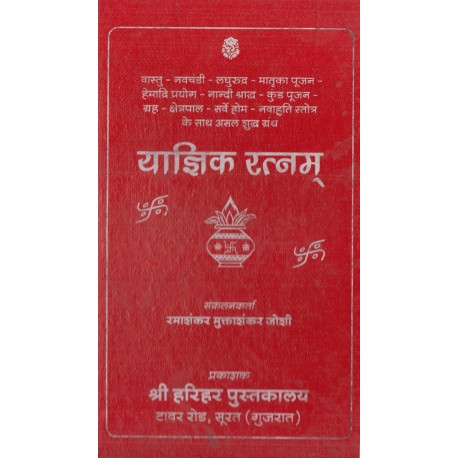
Vastu - Navchandi - Laghurudra - Matruka Pujan - Hemadri Prayog - Nandi Shraddh - Kund Pujan - Gran - Kshetrapal - Sarve Hom - Navahuti Strot Ni Sathe Asal Shuddh Granth

New
Page : 360
Vastu - Navchandi - Laghurudra - Matruka Pujan - Hemadri Prayog - Nandi Shraddh - Kund Pujan - Gran - Kshetrapal - Sarve Hom - Navahuti Strot Ni Sathe Asal Shuddh Granth
The Rajdhani Express is a premier fleet of high-speed, long-distance trains in India that connect the national capital, New Delhi, with major state capitals.
Speed & Efficiency: These are some of the fastest trains in the country, often maintaining average speeds around 80–89 km/h and reaching top speeds of up to 130 km/h on specific stretches.
Onboard Comfort: It is an all-AC service offering sleeper coaches in 1st AC, 2-tier, and 3-tier configurations. Modern iterations, such as the Mumbai Tejas Rajdhani, feature upgraded Tejas-style coaches with improved amenities.
Cost vs. Value: While more expensive than standard "Duronto" or Superfast trains, Rajdhani provides a more premium experience with meals typically included in the fare. The Locomotive Factor (WAP)
Rail enthusiasts often focus on the locomotives (engines) that haul these prestigious trains.
WAP-7: Currently the gold standard for Rajdhani trains. It is favored for its "hotel load" capability, allowing it to power the entire train's air conditioning and lighting directly from the overhead lines without needing separate generator cars.
WAP-5: Another high-speed locomotive used for shorter premium trains, though occasionally discussed in "push-pull" configurations to further increase Rajdhani speeds. Web Usage Note
If you are referring to a specific website or platform with a similar name (such as those ending in .wap or .top), use extreme caution. These domains are frequently used for unofficial third-party content, unofficial rail fan sites, or potentially unsafe file-hosting services. rajdhaniwapin top
We analyzed dozens of forum posts, Reddit threads, and Telegram groups discussing the "rajdhaniwapin top" experience. Here’s a balanced summary.
The "top" suffix often indicates a VIP section. Users associate this with early access to games, high-definition wallpapers, ringtones, or even streaming links. In a crowded digital space, being at the "top" means cutting through the noise.
With the Indian government aggressively blocking piracy sites under the Copyright Act (as amended in 2012 and 2021), domains like RajdhaniWAP.in frequently change extensions (.in, .com, .net, .xyz). The "rajdhaniwapin top" keyword may continue to evolve as users chase the latest mirror link.
However, the long-term trend is declining traffic due to:
If you meant you are looking for the "Top" games or apps (the most popular downloads):
⚠️ Safety Tip: Websites like Rajdhaniwap often rely on advertising revenue. Be careful when clicking "Download" buttons.
Introduction
In an age of satellite mapping and digital omnipresence, it is a rare and intriguing phenomenon to encounter a place name that resists immediate identification. "Rajdhaniwapin Top" is one such linguistic artifact. Deconstructing the term: Rajdhani (Sanskrit/Hindi for "capital" or "seat of a kingdom"), Wapin (a phonetic anomaly possibly derived from a local dialect or a corrupted suffix like "-wapping" or "-bari"), and Top (English for summit or peak). This essay posits that "Rajdhaniwapin Top," whether real or imagined, serves as a powerful metaphor for the tension between centralized power (the Capital) and the unmapped, overlooked peripheries that exist in the shadows of official cartography. By examining the possible nature of such a place, we can discuss themes of geographical identity, colonial legacy, and the stories that fall through the cracks of recorded history.
The Linguistic Landscape: A Clash of Empires
The name itself is a palimpsest of cultural history. "Rajdhani" is rooted in the subcontinent’s pre-colonial past, evoking the grand capitals of maharajas and Mughal emperors. "Top," however, is a direct legacy of British colonial surveying—used extensively for hill stations (e.g., Mahabaleshwar Top, Gun Hill Top) and military outposts. The middle term, "Wapin," is the wildcard. It could be a misspelling of "Wapping" (an English term for a watery or marshy area, incongruous with a peak), or perhaps a Romanization of a local word meaning "of the winds" or "the high lookout."
If "Rajdhaniwapin Top" exists, it likely represents a location where colonial surveyors attempted to impose a phonetic English label onto a pre-existing indigenous name, resulting in a hybrid that makes sense to no single linguistic group. It stands as a monument to the awkward and often violent fusion of languages during the Raj.
Possible Geographies: Between Capital and Summit
What kind of place could bear such a name? It is unlikely to be a major tourist destination. More plausibly, it could be:
A forgotten trigonometrical station: During the Great Trigonometrical Survey of India (19th century), many unnamed peaks were given alphanumeric codes or makeshift names. "Rajdhaniwapin" might have been a local guide’s reference to a peak from which the distant capital (perhaps Delhi or a regional capital like Bhopal or Hyderabad) was visible on a clear day. The Rajdhani Express is a premier fleet of
A borderland viewpoint: In regions like the Northeast Indian hills (Nagaland, Mizoram) or the Chittagong Hill Tracts (Bangladesh), many "Tops" serve as border outposts. A peak named after a "Capital" would be ironic, as it likely sits far from any seat of power, perhaps overlooking a remote valley where the writ of the state runs thin.
A fictional or hyperlocal name: In small villages, local youth often christen their favorite haunts—a swimming hole, a cliff, or a mango tree—with grand, ironic names. "Rajdhaniwapin Top" could be the highest point in a farmer’s field, a place where children go to fly kites, dreaming of the distant, glittering capital they have only seen on television.
The Politics of Naming and Erasure
The obscurity of "Rajdhaniwapin Top" is its most telling feature. In the hierarchy of geographical importance, only peaks over a certain height or strategic value make it onto official maps. Countless smaller hills, local sacred groves, and community landmarks remain unmapped or are given generic survey numbers. The inability to locate this "Top" reflects a broader truth: the official map is a lie of omission. It prioritizes the capital, the railway, and the dam, while erasing the "Wapins" and the local tops that hold meaning for the people who live beneath them.
To search for Rajdhaniwapin Top is to engage in an act of resistance against cartographic erasure. It forces us to ask: Who decides what is named? Whose memory is preserved? And what is lost when a peak is known only to a handful of shepherds or a single dying dialect?
Conclusion
Rajdhaniwapin Top may not appear on Google Maps, nor in any gazetteer of South Asian geography. But in its absence, it becomes a powerful literary and philosophical symbol. It represents every unnamed hill from which a child has looked out at the world and wondered. It embodies the clash of empires in a single corrupted word. And it reminds us that the most interesting places are often those that exist not in the bright center of the capital, but in the hazy, unmapped periphery—the "Top" that only the locals know how to find. Whether real or a product of linguistic accident, this place name challenges us to look beyond the official record and listen for the stories whispered on the windward side of forgotten peaks. The name evokes "rajdhani" (capital) suggesting proximity to
Note: If you are referring to a specific known location (e.g., a hill near Rajdhani College in Delhi, a specific spot in a mobile game called "Rajdhaniwapin," or a misspelling of a Bangladeshi village), please clarify the context. I would be happy to write a new, accurate essay based on verified information.